Dylan Newell - 10/22/2023
Why is a 2x4 not 2 inches by 4 inches? What size is it?
Modern 2x4s measure 1.5 inches by 3.5 inches. This is due to an evolution of the wood sawmill and shipping industries. In short, a 2x4 measures roughly 2 inches by 4 inches when cut from a tree, but shrinks some due to moisture loss when dried. It is then slimmed down further to remove imperfections and inconsistencies. Read below for a more in-depth look into the history.
Can “full-size” lumber still be found today?
Yes, this is typically referred to as “rough-sawn” lumber today as it is commonly not processed to the same extent as modern dimensional lumber. Rough-sawn lumber can be found in virtually any size and proportion limited only by the size of the tree it came from and the limitations of the wood saw mill.
Dimensional lumber: the backbone of countless structures and an essential material for builders, architects, engineers, and homeowners. Whether you're building a deck, framing a wall, or constructing a piece of furniture, chances are you've encountered dimensional lumber. But have you ever paused to wonder why a piece of wood labeled as a 2x4 doesn’t measure 2 inches by 4 inches? Let's embark on a brief journey through the story of lumber history to demystify this curious phenomenon.
From Forest to Frame: The Evolution of Lumber Standards
Centuries ago, there was no standardized way of cutting and selling lumber. Wood was primarily sourced locally, and dimensions varied depending on the mill or craftsman producing it. As America grew and settlements expanded, the need for standardized construction materials became evident. This was further necessitated by the advent of the railroad system, which allowed for the mass transportation of goods. Mills began producing lumber in large quantities, shipping them to far-off places. A system was necessary to ensure consistent quality and dimensions.
In the late 19th and early 20th centuries, lumber associations were formed, and they began setting standards for grading and sizing lumber. These standards were designed not just for consistency but also to take into account the characteristics of different wood species, ensuring that buyers got the quality they expected.
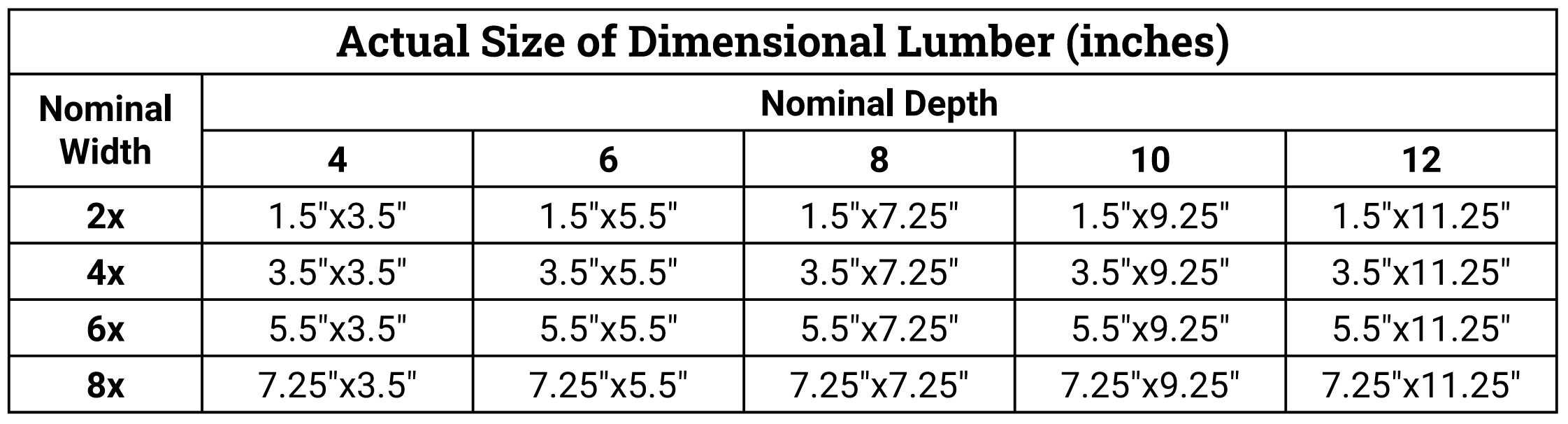
The Shrinking 2x4: The Tale of the Missing Inches
Now, let's tackle the dimensional enigma. If you've ever been surprised (or disappointed) to find that a 2x4 is not 2 inches by 4 inches, you're not alone. The actual size of a 2x4 today is 1.5 inches by 3.5 inches. But why?
When logs are first cut into lumber, the initial rough-sawn dimensions are closer to the nominal size (like 2 inches by 4 inches for a 2x4). However, this freshly milled lumber still contains a significant amount of moisture. As this wood dries, either by air-drying or kiln-drying, it shrinks.
Once dry, the lumber is then planed smooth on all four sides (known as S4S, or "surfaced four sides") to produce a finished product that's easy to work with and free of irregularities or rough edges. This planing process shaves off a bit more from each side, reducing its dimensions further.
It was thus practical for mills to begin with a rough size that was slightly larger than the nominal size so that by the time the lumber was dried and planed, it would be closer to the expected size. Over time, the differences between nominal and actual sizes became standardized and widely accepted in the industry.
For builders, understanding these sizes is crucial. Knowing that a 2x4 is actually 1.5x3.5 ensures accurate calculations for projects. For homeowners, this knowledge can make the difference between a DIY success and a head-scratching conundrum.
The Shipping Industry's Role in Lumber Dimensions
Another factor that influenced the standardization of lumber sizes was the rise of the shipping industry. As demand for transported goods soared, space became a premium on trains and ships. Reducing lumber's cross-sectional dimensions meant more pieces could be packed per shipment, optimizing freight costs. Additionally, consistent sizes ensured predictability when loading and unloading. As a result, mills saw the economic advantage of producing lumber with slightly reduced actual dimensions, while still referring to them by their nominal sizes. This marriage of practicality and economics in the shipping world left a lasting mark on the lumber dimensions we recognize today.
Dimensional Lumber Today: A Legacy of Practicality
Today, dimensional lumber remains a staple in construction worldwide. While the sizing discrepancy between nominal and actual dimensions can be confusing for those not in the know, it stands as a testament to the lumber industry's response to practical concerns. By understanding this history, professionals and DIY enthusiasts alike can appreciate the journey of the humble 2x4, from forest to frame, and the reasons behind its intriguing dimensions.
In conclusion, whether you're a contractor, engineer, architect, student, or homeowner, the world of dimensional lumber is rich with history and practical insights. The next time you pick up that 2x4, remember the journey of innovation and standardization it represents, and let it inspire your creations.